What You’re Seeing at Home
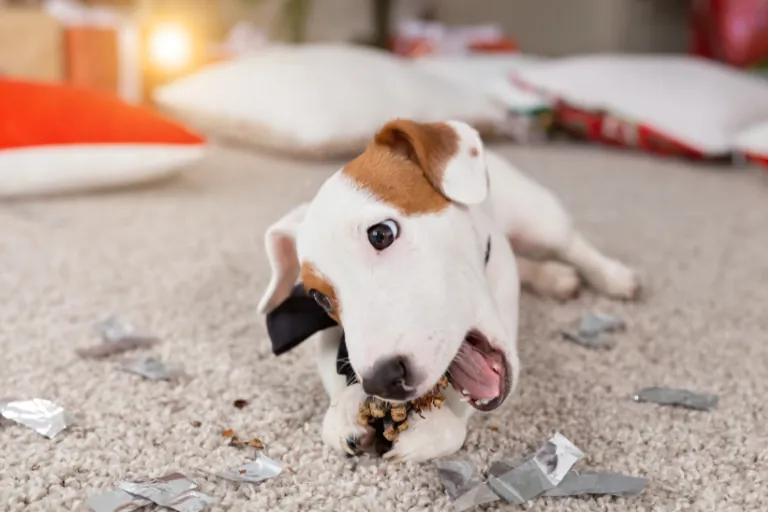
You walk into the kitchen and find the trash can tipped over. There are wrappers on the floor, food scraps are missing, and your dog looks suspiciously satisfied.
If your dog ate trash, the first question is usually: How worried should I be?
Sometimes, a dog may get into the garbage and never develop a problem. However, trash can contain spoiled food, bones, medications, chemicals, packaging, and other items that can cause poisoning, intestinal blockage, or serious digestive problems.
The difficult part is that you may not know exactly what your dog swallowed.
Do not rely only on how your dog looks right after the incident. Some problems cause symptoms quickly, while others may take several hours or longer to become obvious.
Pay attention to vomiting, diarrhea, excessive drooling, loss of appetite, abdominal discomfort, weakness, restlessness, tremors, difficulty breathing, or unusual behavior.
What This Could Mean
When a dog ate trash, the level of risk depends on what was inside the garbage, how much was consumed, and your dog’s size and overall health.
One concern is toxin exposure. Garbage may contain foods that are unsafe for dogs, human medications, household products, moldy food, or other toxic substances. Some toxins can affect the digestive system, nervous system, heart, kidneys, or other organs.
Common household toxins found in trash include chocolate, grapes and raisins, xylitol (increasingly labeled as “birch sugar” — found in sugar-free gum, candy, peanut butter, and baked goods), marijuana products including edibles and discarded packaging, macadamia nuts, onions and garlic, and human medications. Even small amounts of some of these can cause serious illness. If you find torn wrappers or empty containers, save them to show the veterinary team.
Another concern is a foreign body, which means an object that cannot move normally through the digestive tract. Plastic wrap, food packaging, paper towels, bones, corn cobs, string, and other objects can become lodged in the stomach or intestines.
An obstruction may cause repeated vomiting, loss of appetite, abdominal pain, lethargy, or difficulty passing stool. In some cases, removing the object may require endoscopy or surgery.
Fatty leftovers are another risk. Eating a large amount of rich or fatty food may trigger pancreatitis, an inflammation of the pancreas. Dogs with pancreatitis may vomit, refuse food, appear painful, become lethargic, or develop diarrhea.
Eating a large amount of food very quickly can also cause significant stomach distension. A swollen or painful abdomen, especially when paired with unsuccessful attempts to vomit, restlessness, weakness, or collapse, requires immediate veterinary attention.
In deep-chested large breeds — Great Danes, German Shepherds, Standard Poodles, Weimaraners, Boxers, Setters, and similar builds — this kind of rapid overeating can trigger a life-threatening condition called gastric dilatation-volvulus (GDV, or bloat), where the stomach twists on itself. GDV can become fatal within hours, so any of these dogs showing a distended abdomen, unproductive retching, or restlessness after getting into food should be seen immediately.
Normal vs. Emergency Signs
If your dog ate trash, you may wonder: Is this an emergency?
The answer depends on what your dog may have swallowed and the symptoms that follow.
A dog that stole a small amount of familiar, non-toxic food and remains completely normal may not face the same level of risk as a dog that consumed an unknown amount of garbage.
However, unknown ingestion deserves more caution because you cannot always tell what is missing.
Seek prompt veterinary guidance if your dog develops:
- Repeated vomiting or diarrhea
- Excessive drooling
- Tremors or seizures
- Weakness or collapse
- Difficulty breathing
- A swollen or painful abdomen
- Repeated attempts to vomit without producing anything
- Pale or abnormal-looking gums
- Significant lethargy
- Refusal to eat
- Signs of severe pain
- Difficulty passing stool
Known or suspected ingestion of medications, chemicals, toxic foods, sharp objects, batteries, or other hazardous materials also requires immediate attention, even if your dog currently seems normal.
Symptoms are not always immediate.
When to Go to the ER
If you know or strongly suspect that your dog swallowed something toxic or dangerous from the garbage, this is not something to monitor at home.
Contact an emergency veterinary hospital promptly.
Do not try to make your dog vomit unless a veterinarian specifically tells you to do so. Vomiting can make certain exposures more dangerous, particularly when sharp objects or irritating chemicals are involved.
If possible, identify what your dog may have consumed. Bring packaging, labels, medication bottles, or a photo of the substance with you. This information can help the emergency team assess the risk more quickly.
You should also go directly to the ER if your dog is having trouble breathing, repeatedly vomiting, experiencing tremors or seizures, showing significant abdominal swelling, becoming weak, or collapsing.
When you do not know what your dog swallowed, contacting an emergency veterinary team can help determine the safest next step.
How Emergency Teams Stabilize These Cases
What happens at the ER depends on what your dog consumed and how they are feeling when they arrive.
The emergency team will first assess your dog’s vital signs and overall stability. If breathing, circulation, or neurological function is affected, stabilization becomes the immediate priority.
Blood tests may help evaluate organ function, hydration, blood sugar, electrolytes, or other changes related to poisoning or illness.
X-rays or ultrasound may be recommended when the team suspects an intestinal obstruction or another gastrointestinal problem.
In certain cases, an object that remains in the stomach may be removable with endoscopy. This procedure uses a flexible camera and specialized instruments to examine the digestive tract and, when possible, retrieve the object without abdominal surgery.
Other foreign bodies may require surgery, particularly if they have moved into the intestines or caused an obstruction.
Dogs experiencing dehydration or significant gastrointestinal symptoms may need IV fluids and medication as part of supportive care. More serious cases may require hospitalization and close monitoring.
The goal is to identify the problem early, stabilize the patient, and reduce the risk of complications.
Special Considerations in Florida and Texas
Dogs in Florida and Texas often spend time outdoors throughout the year, which can create additional opportunities for accidental ingestion.
In Florida, heat and humidity can make dehydration more concerning when a dog is already experiencing vomiting or diarrhea. Outdoor garbage, spoiled food, standing water, certain plants, and other environmental exposures may also present risks.
In Texas, extreme heat can also make dehydration more serious, especially when vomiting or diarrhea is involved. In busy suburban communities, dogs may encounter unsecured outdoor trash, discarded food, household chemicals, landscaping products, and other potentially harmful materials during walks, time in the yard, or everyday activities.
Warm temperatures in both states can also cause discarded food to spoil quickly. A trash bag left outdoors or food forgotten after a cookout may become a tempting target for a curious dog.
Regardless of location, secure household and outdoor garbage containers with lids your dog cannot easily open.
Do not assume putting the trash somewhere slightly higher will stop a determined dog. Closed cabinets, secured pantry areas, locking lids, and restricted access provide better protection.
FAQ
My dog ate trash but seems fine. Should I still worry?
It depends on what may have been swallowed. Some toxins and intestinal obstructions do not cause immediate symptoms. If the contents are unknown or potentially dangerous, contact a veterinarian or emergency veterinary team for guidance rather than waiting for symptoms.
How long after eating trash can a dog become sick?
Timing varies depending on what your dog consumed. Some reactions can begin quickly, while gastrointestinal irritation, pancreatitis, or signs of an obstruction may appear later. A normal appearance immediately after the incident does not always rule out a problem.
How can I stop my dog from getting into the trash?
Use a trash can with a secure or locking lid and keep hazardous garbage behind a closed door or inside a cabinet when possible. Avoid leaving food waste, medications, chemicals, bones, or potentially dangerous objects where your dog can reach them.
If you’re in Florida or Texas and you’re unsure whether your pet’s symptoms require urgent care, our Greenlight Pet ER teams are available 24/7. When in doubt, it’s always safer to have your pet evaluated.