
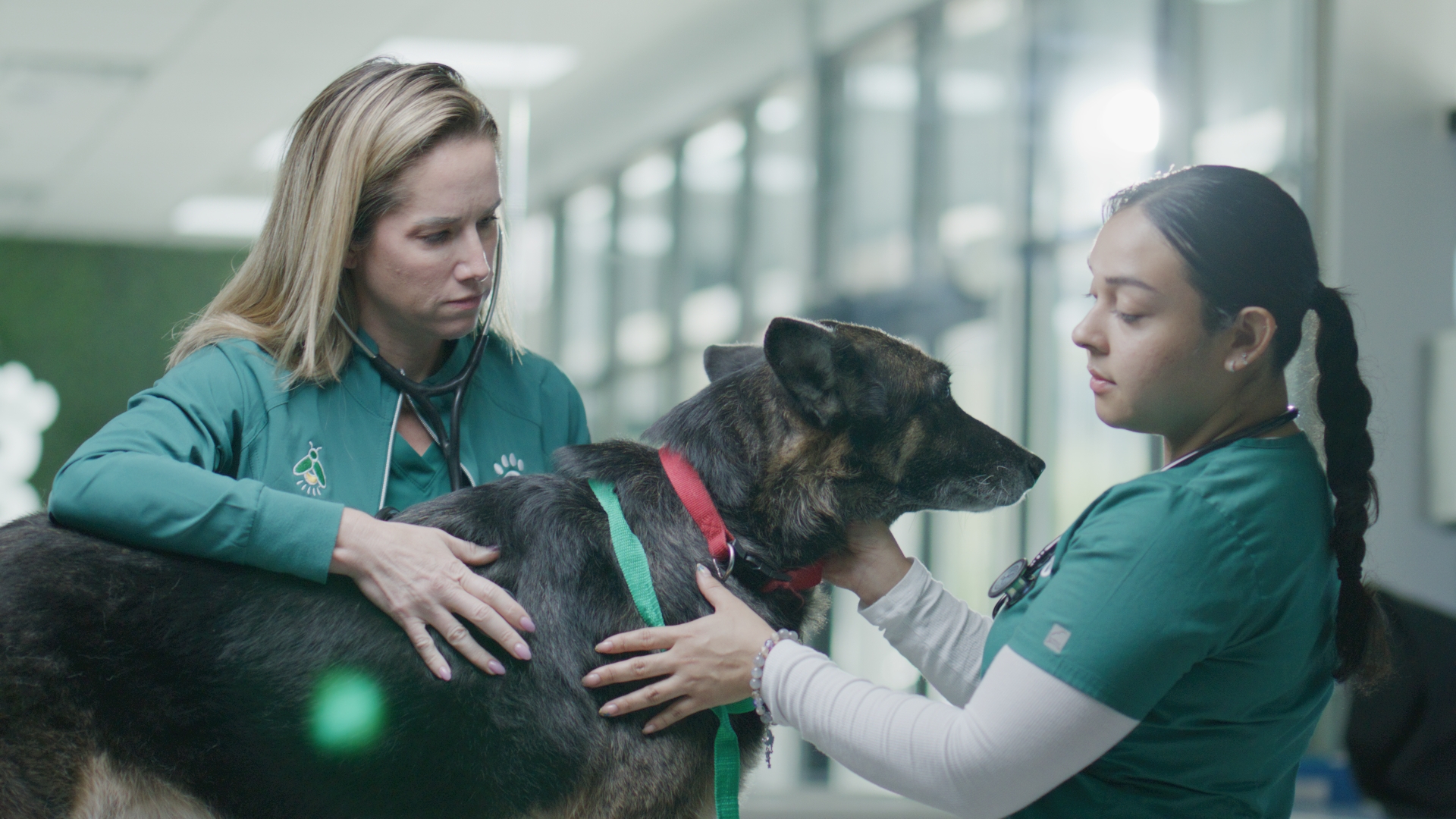
Caring for Pets Means Caring Deeply
Behind every pet receiving veterinary care is a team of people who chose this profession because animals matter to them.
September is recognized around the world as a month dedicated to mental health awareness and suicide prevention. In Brazil and much of Latin America, it is known as Setembro Amarelo (“Yellow September”). In the United States, September is Suicide Prevention Awareness Month. Whatever the name, the message is the same: mental health matters — and it matters for the people caring for our animals too.
Veterinarians, veterinary technicians, assistants, and support teams spend their days helping pets through illness, injury, recovery, and some of the most difficult moments a family can experience.
That work can be incredibly meaningful. It can also carry a significant emotional weight.
Veterinary mental health deserves the same thoughtful attention we give to other aspects of well-being. Talking openly about the emotional demands of veterinary medicine can help reduce stigma, encourage connection, and remind veterinary professionals that asking for support is a sign of awareness, not weakness.
At Greenlight Pet ER, emergency medicine gives us a unique view of the bond between people and their pets. We see how deeply families love their animals—and how deeply veterinary teams care about the patients who come through their doors.
The Emotional Side of Veterinary Medicine
Veterinary medicine involves much more than examining animals and treating disease.
A single shift may include stabilizing a critically ill pet, supporting a worried family, managing an unexpected emergency, celebrating a patient’s improvement, and helping another family through loss.
Emergency veterinary medicine can make those emotional transitions happen quickly.
Teams must remain focused when a patient needs immediate stabilization. They need to communicate clearly with families who may be scared or overwhelmed. At the same time, they must make careful medical decisions in situations where every minute matters.
Then, after one case ends, another patient may arrive needing the same level of attention.
Over time, carrying those experiences can become emotionally demanding.
Recognizing that reality does not diminish the rewarding side of veterinary medicine. Instead, it gives us a more complete picture of what it means to care for animals professionally.
Understanding Compassion Fatigue and Burnout
Two terms often discussed in conversations about veterinary mental health are compassion fatigue and burnout.
They are related, but they are not exactly the same.
Compassion fatigue can develop from repeated exposure to the suffering or distress of others. Veterinary professionals regularly care for sick or injured animals while also supporting the people who love them.
Burnout is often associated with prolonged workplace stress. Emotional exhaustion, demanding schedules, workload, and difficulty disconnecting from work can all contribute.
There is also grief.
Veterinary professionals build connections with patients and families. When a patient cannot recover or a family must make a difficult end-of-life decision, the veterinary team may experience that loss too.
Those feelings do not disappear simply because someone is a medical professional.
Creating space to acknowledge them matters.
Emergency Veterinary Medicine Brings Unique Challenges
Emergency veterinary hospitals operate differently from routine veterinary practices.
Patients often arrive without an appointment because something unexpected has happened. Some need immediate intervention. Others require diagnostics, monitoring, hospitalization, or surgery.
Families may arrive frightened, exhausted, or uncertain about what is happening.
In these moments, emergency veterinary professionals must balance medical urgency with compassionate communication.
They may be managing several critical patients while continuing to update families, reassess hospitalized pets, interpret diagnostic results, and prepare for the next emergency.
There are rewarding moments, too.
Seeing a critically ill patient stabilize, watching a pet reunite with their family, or knowing that a team was there when a family needed help can be deeply meaningful.
Both realities can exist at the same time.
Veterinary medicine can bring enormous purpose while still being emotionally difficult.
Why Talking About Veterinary Mental Health Matters
For many years, conversations about mental health in demanding professions were often kept private.
That is changing.
Talking openly about veterinary mental health helps create an environment where people can recognize when they need support and feel more comfortable seeking it.
It also helps challenge the idea that veterinary professionals should simply become accustomed to difficult cases.
Caring deeply is part of what makes someone compassionate at their job. The goal should not be to stop caring.
Instead, veterinary workplaces and communities can encourage healthier ways to process difficult experiences, recover after demanding shifts, and support one another.
Sometimes that means having a conversation with a colleague.
Sometimes it means taking time away from work, setting boundaries, using mental health resources, or seeking professional support.
There is no single approach that works for everyone. What matters is creating a culture where well-being is part of the conversation.
How Veterinary Teams Can Support Each Other
Mental health support does not always begin with a major program or initiative.
Often, it starts with people paying attention to one another.
Checking in after a difficult case can matter. Giving someone space to process an emotional experience can matter. Encouraging breaks, respecting time away from work, and creating an environment where team members can speak openly can matter.
Leadership also plays an important role.
Clear communication, psychological safety, access to resources, and recognition of the emotional demands of the work can help create healthier veterinary teams.
Education is another important piece. When veterinary professionals understand concepts such as burnout, compassion fatigue, and secondary traumatic stress, they may be better able to recognize changes in themselves or their colleagues.
Most importantly, support should not depend on someone reaching a breaking point.
Mental well-being deserves ongoing attention.
Pet Owners Are Part of the Veterinary Community Too
There is another side of this conversation that deserves recognition: pet owners.
When you arrive at an emergency veterinary hospital, you may be having one of the most frightening days you have experienced with your pet.
You want answers. You want your pet to feel better. You may be worried about what happens next.
Those feelings are understandable.
On the other side of that conversation is a veterinary team working toward the same goal: helping your pet.
Kindness and clear communication in both directions can make difficult moments a little easier.
A simple thank-you after a challenging case can stay with someone. So can patience while an emergency team prioritizes a critically unstable patient.
Veterinary medicine works best when families and medical teams see each other as partners in the same mission: caring for animals.
Building a Healthier Veterinary Profession
Supporting veterinary mental health is not about eliminating every difficult moment from veterinary medicine. That would be impossible.
Animals will become sick. Emergencies will happen. Families will face difficult decisions. Veterinary professionals will continue to care deeply about those experiences.
Instead, a healthier profession recognizes that the people providing that care also need support.
That can mean building stronger teams, encouraging open conversations, improving access to mental health resources, recognizing signs of emotional exhaustion, and making it easier for someone to say, “I need help.”
It also means celebrating what makes veterinary medicine meaningful.
Every day, veterinary professionals comfort frightened animals, solve complicated medical problems, support families, advocate for patients who cannot speak for themselves, and sometimes save lives.
Those moments matter too.
A Reminder for the People Behind the Scrubs
If you work in veterinary medicine, your well-being matters beyond your ability to care for the next patient.
You are a person before you are a veterinarian, technician, assistant, receptionist, manager, or any other role you hold.
You deserve rest.
You deserve support.
You deserve to talk about difficult days.
And you do not have to carry every difficult case alone.
For veterinary professionals who need additional support, organizations dedicated to veterinary well-being can provide education, peer support, and mental health resources. If you or someone you know is struggling or in immediate danger, reach out to local emergency services or a crisis support service in your area.
Some resources worth knowing: Not One More Vet (NOMV) is a nonprofit dedicated specifically to veterinary mental health and offers peer support, grants, and educational resources. The AVMA (American Veterinary Medical Association) Wellbeing page provides tools, self-assessments, and links to counseling. In the United States, the 988 Suicide & Crisis Lifeline can be reached 24/7 by call or text at 988 for anyone in crisis or supporting someone who is.
Caring Goes Both Ways
At Greenlight Pet ER, caring is at the center of emergency veterinary medicine.
We care for pets when something unexpected happens. We support families through uncertain moments. And we believe it is equally important to recognize the people who make that care possible every day.
Conversations about veterinary mental health should not happen only when someone is struggling. They should be part of building a profession where compassion extends to colleagues, teams, and ourselves.
Because caring for animals takes heart.
And the people giving that care deserve care, too.

