

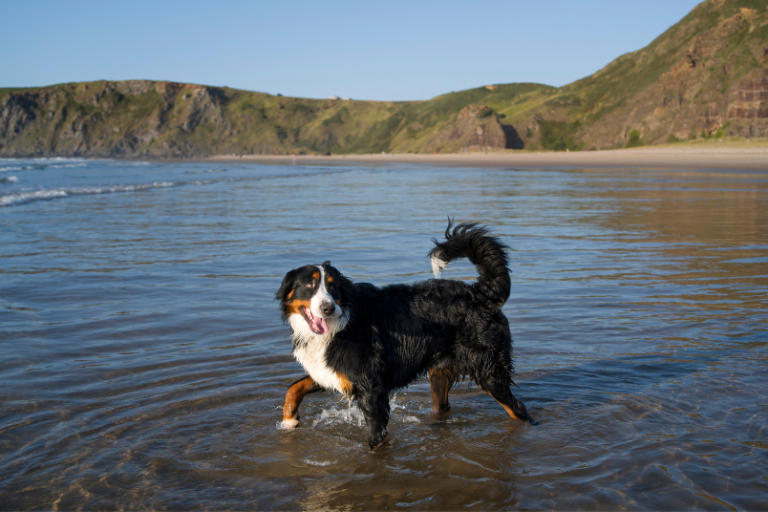
Water activities can be a great way for dogs to exercise, cool off, and enjoy time outdoors. However, water emergencies in dogs can happen unexpectedly, even to strong swimmers. Accidental drowning, exhaustion, contaminated water exposure, hypothermia, marine animal injuries, and sudden medical events in the water can quickly become life-threatening situations.
Knowing what to watch for and when to seek emergency care can help protect your dog and improve the chances of a positive outcome.
What You’re Seeing at Home
Many water-related emergencies begin with symptoms that seem mild at first.
Recognizing swimming fatigue can prevent a near-drowning event. Tired dogs often show a low or sinking tail, hindquarters that drop below the surface, frantic or splashy paddling rather than smooth strokes, swimming in circles or away from the exit, repeatedly trying and failing to climb out, an open mouth at the waterline, wide or panicked eyes, and a head that struggles to stay above the water. Any of these signs means the dog should be removed from the water immediately and allowed to rest.
Your dog may appear unusually tired after swimming, struggle to get out of a pool, cough repeatedly, or seem weak after being in the water. Some dogs may swallow large amounts of water and later develop vomiting, diarrhea, or lethargy.
In more serious cases, dogs may have difficulty breathing, collapse, become disoriented, or lose consciousness. If a dog spends too much time in cold water, they may begin shivering, appear weak, or have trouble standing.
Marine animal encounters can also cause sudden symptoms. A dog stung by a jellyfish may yelp, lick the affected area, develop swelling, or show signs of pain and distress.
Because water emergencies in dogs can worsen rapidly, it is important to take any unusual symptoms seriously after swimming or water exposure.
What This Could Mean
Water-related incidents can affect several body systems at once.
One of the most dangerous situations is accidental drowning or near-drowning. This occurs when water enters the airways and lungs, making it difficult for oxygen to reach the body. Even if a dog appears to recover initially, complications can develop later.
Exhaustion is another common concern. Dogs may become fatigued while swimming long distances or while trying repeatedly to exit pools that lack safe ramps or steps. Once exhausted, they can struggle to keep their heads above water.
Drinking saltwater is another risk at the beach. Dogs often gulp seawater while playing in the waves or biting at the surf, and even a small amount can make them sick. Watch for vomiting, diarrhea, excessive thirst, weakness, a wobbly or drunken-looking walk, tremors, or in serious cases, seizures. Symptoms can start within a few hours and get worse quickly. Offer fresh water often, take breaks from the surf, and don’t let your dog bite at waves.
Contaminated water exposure can introduce bacteria, parasites, or toxins into the body. Lakes, ponds, canals, and stagnant water may contain organisms that can cause serious gastrointestinal illness or infections.
Pool chemicals also deserve mention — concentrated chlorine tablets, pool shock, and algaecides are caustic if ingested or licked off paws and fur, and can cause oral burns, drooling, vomiting, and respiratory irritation. Always store pool chemicals securely and rinse dogs after pool use.
Hypothermia develops when a dog’s body temperature drops below normal after prolonged exposure to cold water. This can affect circulation, heart function, and overall body systems.
Marine animal encounters, including jellyfish stings, can cause pain, skin irritation, swelling, and, in rare cases, more severe reactions.
Sometimes the water itself is not the primary problem. Dogs can experience sudden medical events such as seizures, heart-related issues, or other emergencies while swimming, which may lead to drowning risks.
Dogs at Higher Risk
Not every dog handles water the same way. Brachycephalic breeds — including English and French Bulldogs, Pugs, Boston Terriers, Boxers, and Shih Tzus — are at significantly higher risk for water emergencies, even in their own backyard pools. Their short muzzles, narrow airways, and dense, top-heavy body composition make swimming physically difficult, and many tire quickly or struggle to keep their nose and mouth above the waterline. These breeds are also prone to airway swelling and breathing difficulty when stressed or overheated, which can worsen rapidly during a water incident. Other dogs that may need extra supervision include puppies, senior dogs, dogs with arthritis or limited mobility, and dogs that are overweight or unfamiliar with swimming. Any of these dogs should wear a properly fitted canine life jacket near pools, lakes, or open water, and should never be left unsupervised around water, even briefly.
Normal vs. Emergency Signs
Many dogs cough briefly after swallowing a small amount of water during play. Mild fatigue after an active day of swimming may also be normal.
However, pet owners often ask, “Is this an emergency?”
The answer is yes if your dog shows any of the following signs:
- Difficulty breathing
- Persistent coughing after water exposure
- Blue, gray, or pale gums
- Collapse or loss of consciousness
- Extreme weakness
- Confusion or disorientation
- Repeated vomiting
- Severe swelling after a marine animal encounter
- Uncontrolled shivering
- Inability to stand
- Seizure activity
These symptoms can indicate serious complications involving the lungs, nervous system, circulation, or body temperature regulation.
If symptoms seem to be worsening rather than improving, emergency evaluation is recommended.
When to Go to the ER
Because water emergencies can become life-threatening quickly, prompt veterinary attention is important.
If your dog experienced a near-drowning event, lost consciousness in the water, struggled significantly to stay afloat, inhaled water, or developed breathing difficulties afterward, they should be evaluated immediately.
Similarly, dogs showing signs of hypothermia, severe weakness, collapse, neurological symptoms, or severe reactions following marine animal exposure require urgent care.
This is not something to monitor at home.
Even when a dog appears stable after a water-related incident, delayed complications can occur. Problems affecting the lungs and oxygen levels may develop hours after the initial event.
Early treatment improves outcomes and helps veterinary teams identify complications before they become more serious.
How Emergency Teams Stabilize These Cases
When a dog arrives at an emergency hospital with a water-related emergency, the first priority is stabilization.
The veterinary team will assess breathing, heart rate, oxygen levels, body temperature, and overall circulation.
Depending on the situation, treatment may include:
- Oxygen therapy
- Continuous monitoring
- Intravenous fluids
- Temperature support for hypothermia
- Pain management
- Bloodwork
- Chest imaging
- Ultrasound evaluation
- Treatment for infections or secondary complications
If a dog inhaled water, advanced monitoring may be needed to watch for respiratory complications.
For dogs that experienced collapse, seizures, or sudden medical events while swimming, emergency teams may investigate underlying conditions that contributed to the incident.
The goal is to stabilize the patient, identify complications early, and provide supportive care tailored to the dog’s needs.
Special Considerations in Florida and Texas
Water activities are especially common in both Florida and Texas due to warm weather and outdoor lifestyles.
In Florida, dogs frequently encounter beaches, lakes, canals, and coastal environments, where warm water can encourage bacterial growth. Coastal swimming also brings the risk of marine wildlife encounters — jellyfish stings, Portuguese Man o’ War (more severe than typical jellyfish), stingrays, and lacerations from sharp shells or coral. Brackish water and open wounds can lead to Vibrio vulnificus infection, which progresses rapidly. During red tide events, dogs can also become ill from inhaling aerosolized toxins or licking affected fur.
In Texas, dogs often enjoy pools, lakes, reservoirs, and urban waterfront areas. Extreme summer temperatures can lead owners to seek water-based activities for cooling off, which may increase exposure to water hazards, exhaustion, and contaminated recreational water sources.
In both states, pool safety is an important consideration. Dogs can become trapped in pools if they cannot locate an exit point or become too fatigued to reach one.
Installing visible exit ramps and supervising swimming activities can significantly reduce risk.
FAQ
Can a dog develop problems hours after a near-drowning incident?
Yes. Some complications affecting breathing and oxygen exchange may develop several hours after the event. Any dog involved in a near-drowning situation should be evaluated promptly.
Why is my dog coughing after swimming?
Occasional mild coughing may occur after swallowing water. However, persistent coughing, breathing difficulty, weakness, or changes in gum color require immediate veterinary attention.
How can I help prevent water emergencies in dogs?
Supervise all swimming activities, provide easy pool exits, avoid contaminated water sources, monitor for fatigue, and keep dogs away from marine wildlife whenever possible.
If you’re in Florida or Texas and you’re unsure whether your pet’s symptoms require urgent care, our Greenlight Pet ER teams are available 24/7. When in doubt, it’s always safer to have your pet evaluated.