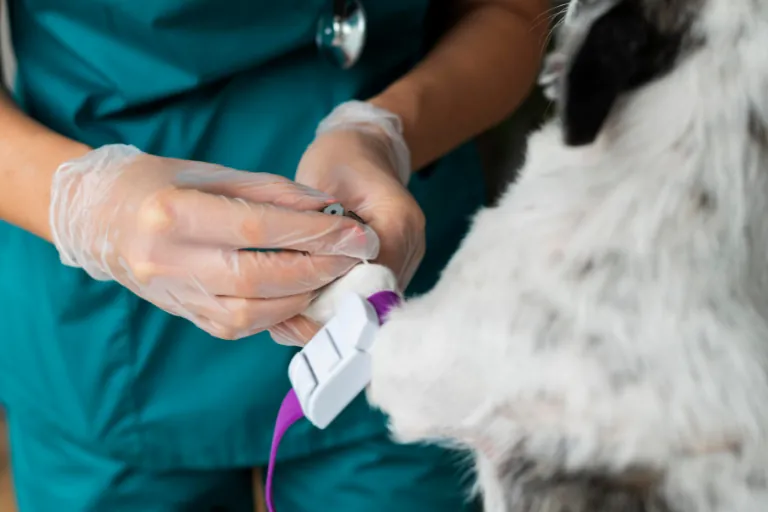

Pain in dogs and cats is often subtle at first. Most pets instinctively hide discomfort.
You may notice small behavior changes. Your dog may stop jumping or seem restless. Your cat may hide, stop grooming, or avoid the litter box.
Common signs include:
- Panting without exercise
- Trembling
- Refusing food
- Hunched posture
- Limping
- Whining or growling when touched
- Excessive licking of one area
Some pets cannot get comfortable. Others become unusually quiet or clingy.
If these changes appear suddenly — especially with vomiting, weakness, or breathing changes — the situation may be serious. This can become serious quickly.
What This Could Mean
Pain in dogs and cats can come from many causes.
Abdominal pain may signal obstruction, bloat (GDV), inflammation, or internal injury. These pets often vomit, stretch repeatedly, or guard their belly.
Breathing discomfort may point to respiratory distress. Pets may sit upright, extend their neck, or breathe rapidly.
Sudden back or neck pain may indicate spinal injury. Weakness or collapse can signal circulatory shock, which affects blood flow to vital organs.
Even if you did not see trauma, falls or outdoor injuries can happen unnoticed.
Because pets cannot tell us what hurts, behavior is often the only warning sign.
Early evaluation helps identify the cause before complications develop.
Normal vs Emergency Signs
You may ask, Is this an emergency?
Mild soreness after intense activity may improve within 24 hours. A brief limp that resolves may not require ER care.
However, emergency signs include:
- Crying out suddenly
- Bloated abdomen
- Repeated vomiting
- Difficulty breathing
- Inability to stand
- Collapse
- Pale gums
Pain that worsens, spreads, or combines with weakness is not normal.
If your pet appears distressed or disoriented, urgent care is needed.
When to Go to the ER
If your pet shows moderate to severe pain, especially with other symptoms, this is not something to monitor at home.
Pain is the body’s alarm system. When intense or sudden, it often signals a deeper problem.
Go to the ER immediately if:
- Your pet cannot get comfortable
- The abdomen looks swollen
- Breathing seems labored
- Your pet collapses
- Gums appear pale
- There was recent trauma
Advanced diagnostics and monitoring may be necessary to stabilize the condition safely.
At Greenlight Pet ER, our teams are available 24/7 to evaluate life-threatening conditions.
If you’re unsure, it’s safer to have your pet evaluated.
How Emergency Teams Stabilize These Cases
Emergency care begins with rapid assessment.
We evaluate airway, breathing, and circulation immediately. Oxygen therapy may be provided if needed.
IV fluids help stabilize blood pressure and circulation. Imaging such as X-rays or ultrasound identifies internal injury or obstruction.
If surgery is required, it is performed under close monitoring. In other cases, intensive supportive care allows safe recovery.
Acting early often reduces complications and improves stability.
Special Considerations in Florida and Texas
In Florida and Texas, heat and humidity increase dehydration risk. Outdoor activity year-round raises exposure to trauma and environmental toxins.
Because warm climates can accelerate shock and dehydration, painful conditions may progress faster.
Prompt evaluation is especially important in these environments.
FAQ
Is sudden pain in dogs and cats always an emergency?
Sudden or severe pain should be treated as urgent. It can indicate internal injury or life-threatening conditions.
How can I tell if my pet is hiding pain?
Watch for behavior changes such as hiding, panting, limping, reduced appetite, or unusual posture.
How can I prevent painful emergencies?
Supervise outdoor activity, avoid hazardous items, and monitor pets closely during extreme heat.
Is sudden pain in dogs and cats always an emergency?
Sudden or severe pain should be treated as urgent. It can indicate internal injury or life-threatening conditions.
How can I tell if my pet is hiding pain?
Watch for behavior changes such as hiding, panting, limping, reduced appetite, or unusual posture.
How can I prevent painful emergencies?
Supervise outdoor activity, avoid hazardous items, and monitor pets closely during extreme heat.
If you’re in Florida or Texas and you’re unsure whether your pet’s symptoms require urgent care, our Greenlight Pet ER teams are available 24/7. When in doubt, it’s always safer to have your pet evaluated.